Field dispatch
Five Nestlings Fill the Cup and Begin to Overflow
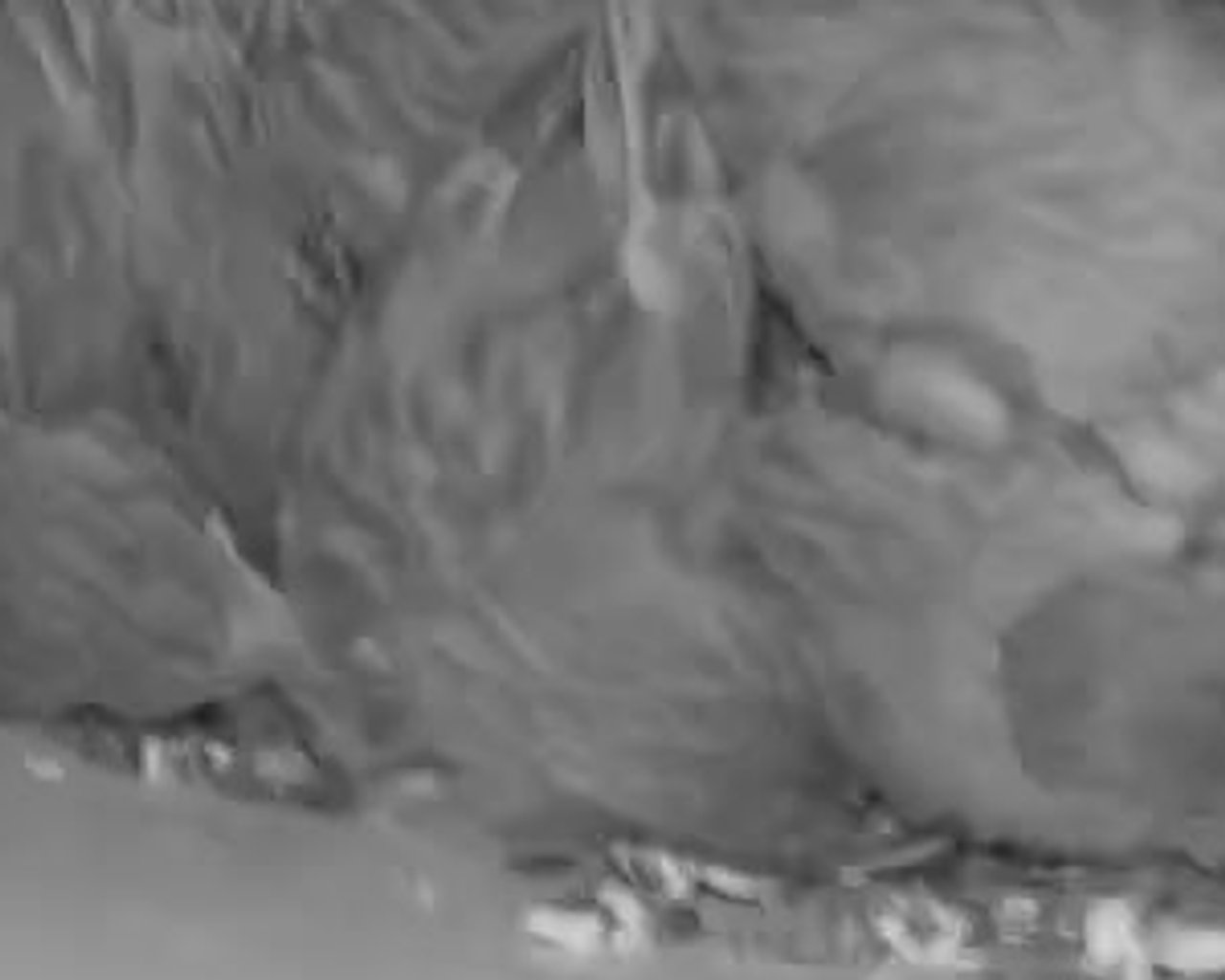
These three days form a single continuous arc — not three separate ledger entries but one long sentence of growth that only the gaps between pages obscure. When I sit with the full sequence from Tuesday through Thursday, the story is unmistakable: a brood of five House Finch nestlings pressing against the walls of a cup that built itself around eggs and can no longer contain what those eggs became.
Tuesday, 19 May. The overnight record opens with the female in the cup. The NIR-albedo of her back fills the frame in the characteristic high-contrast shape I have come to read as settled adult: broad, still, shoulders slightly raised. Brief gaps appear through the pre-dawn hours — she is absent perhaps a minute or two, during which the cluster of chick bodies reorganizes itself without her. By first light, both adults are moving. The male appears at 06:13 and again at 06:39; the female made her first confirmed feeding delivery around 06:04. For the rest of the day they trade visits at irregular intervals of roughly fifteen to sixty minutes. The highest single-clip chick count today is five, all gaping simultaneously at 13:42. Gaping behavior — the wide-angled, pale-fleshed opening of the bill — had begun appearing as early as 03:49 in the overnight frames, but by mid-morning it is nearly constant when an adult is absent.
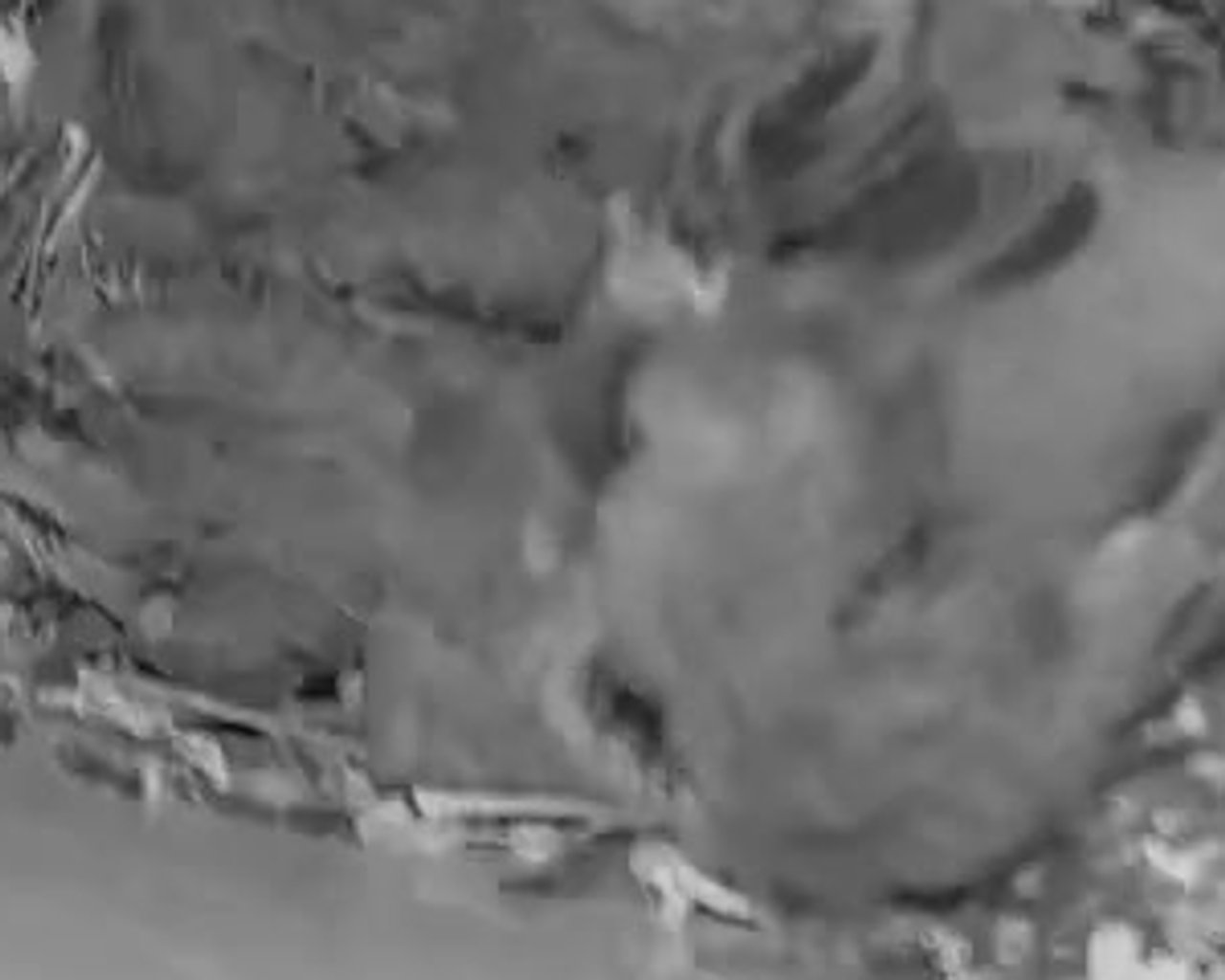
Wednesday, 20 May. The overnight record reveals a shift that Tuesday only hinted at: the brooding bouts are shorter and the gaps longer. The female still returns, but the chicks spend substantial stretches unattended — three or four of them visible as a mounded, high-NIR-albedo cluster in the infrared frame, moving slightly, occasionally gaping at nothing. This is not neglect; it is development. Chicks old enough to thermoregulate partially require less continuous contact. Yellow gape flanges are clearly visible in color footage at 06:49, a detail that orients me on the developmental ladder. By 07:08 and 07:09, five chicks are simultaneously visible and gaping with the male at the rim — the full complement, all present, all insistent. The male visits a dozen or more times before dark; the female adds several more and brooding sessions of diminishing length. Seed debris and dropping accumulation, first prominent at 07:22, has thickened to a heavy mat by mid-afternoon. At 21:19 comes the single most unusual clip of the week: two adults at the nest at once, one settled in the cup, one at the rim leaning over. It lasts only seconds.
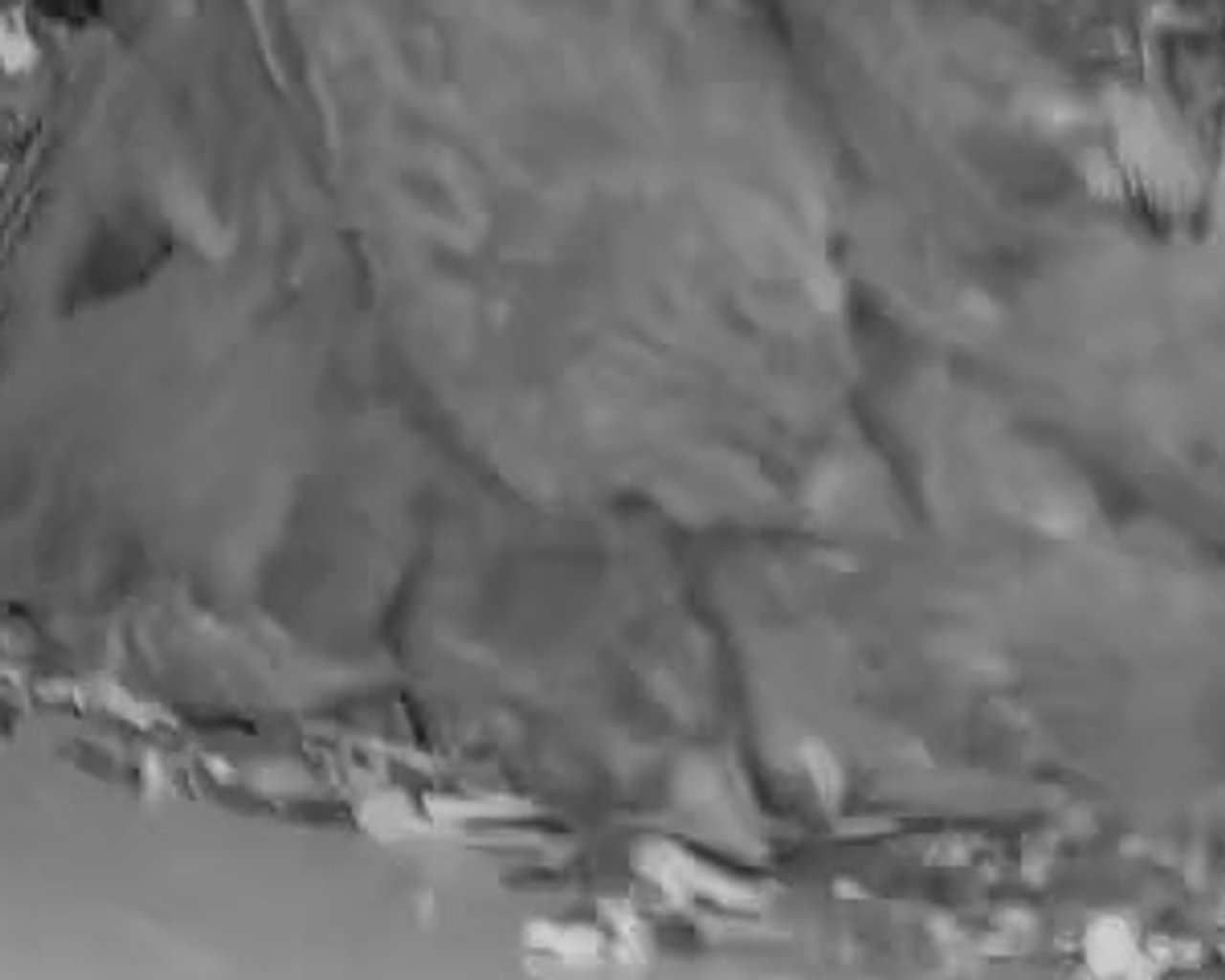
Thursday, 21 May. The overnight begins with another two-adult moment at 00:29, then settles into the now-familiar rhythm of brief female presence and long chick-only gaps. But something new surfaces by mid-morning: chicks are appearing outside the cup. Clips at 08:31, 11:01, 13:28, 13:56, and 14:30 each show feathered juveniles huddled on the shelf adjacent to the cup rather than inside it. The cup was built to hold five eggs in a tight spiral of grass and rootlet; five fourteen-day nestlings fill it past capacity. The overflow onto the shelf is not a failure of the structure but a statement about the animals inside it. Five individuals are again confirmed in frame simultaneously between 07:15 and 07:37, and at 10:23 and 14:20. Feeding visits from both adults continue through the evening at the same rough cadence — twenty to forty minutes between arrivals — though the chicks receiving those deliveries are now sometimes perched at the cup rim rather than sunk inside it.
The thread connecting all three days is that interval between adult visits — the unattended period during which the chicks must simply wait. On Tuesday it was measured in tens of minutes. On Wednesday the gaps grew. On Thursday the chicks began to use those gaps to explore the edge of the cup and the shelf beyond. The adults have not changed their feeding cadence; it is the chicks who are redefining what the space around the nest means. The nest, which was once the whole world, is becoming a landmark.