Field dispatch
Five Chicks, Two Pale Ovals, Three Days of Provisioning
May 13–15, 2026 · Wednesday through Friday
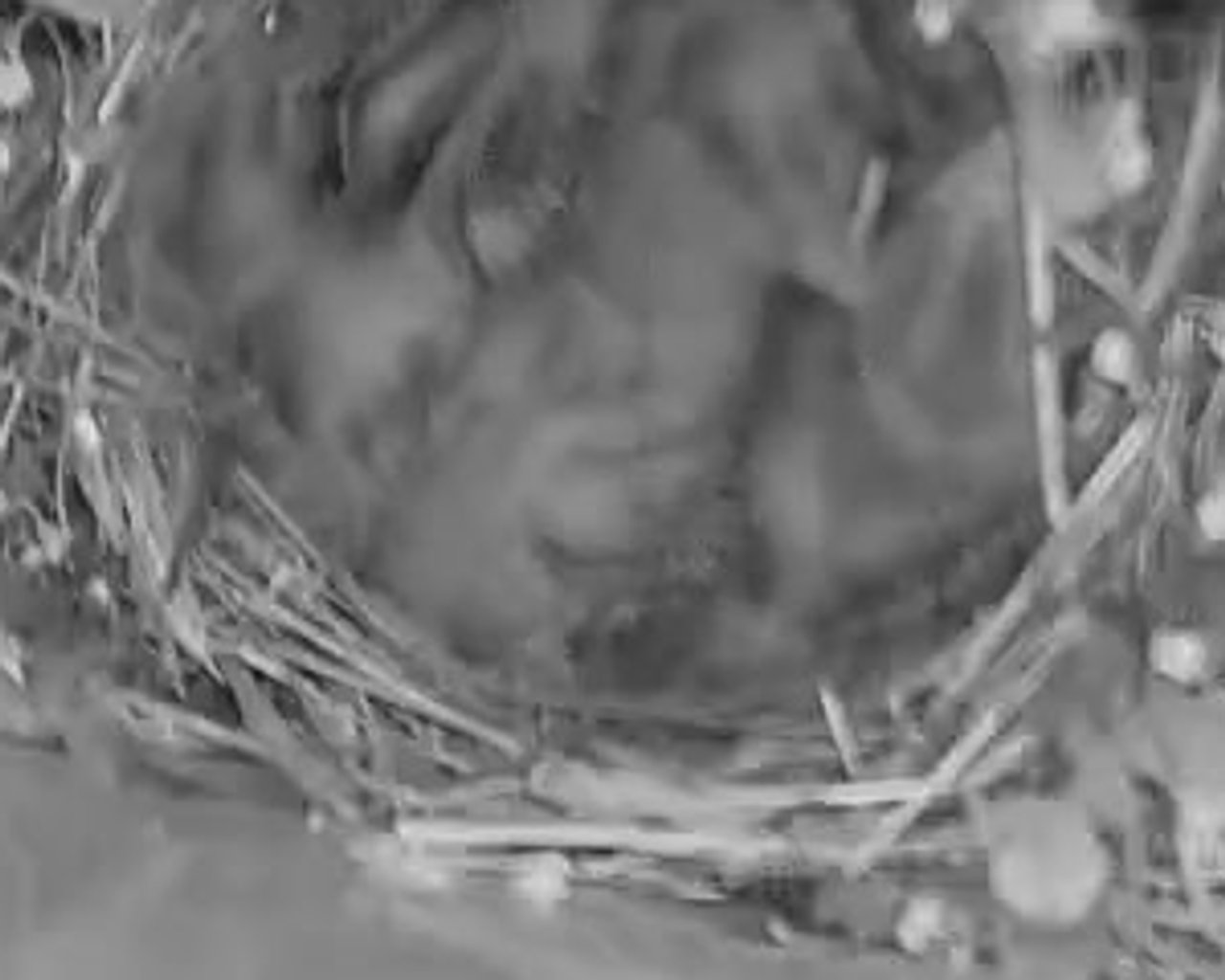
Three days ago the nest cup still held secrets. By May 15 it holds five small bodies that shift and gape and press against each other without waiting for an adult to stand above them. What the camera reveals across these seventy-two hours is not simply a series of feedings but a coherent arc — a brood consolidating itself while the adults fall into the deepening rhythm of provisioning.
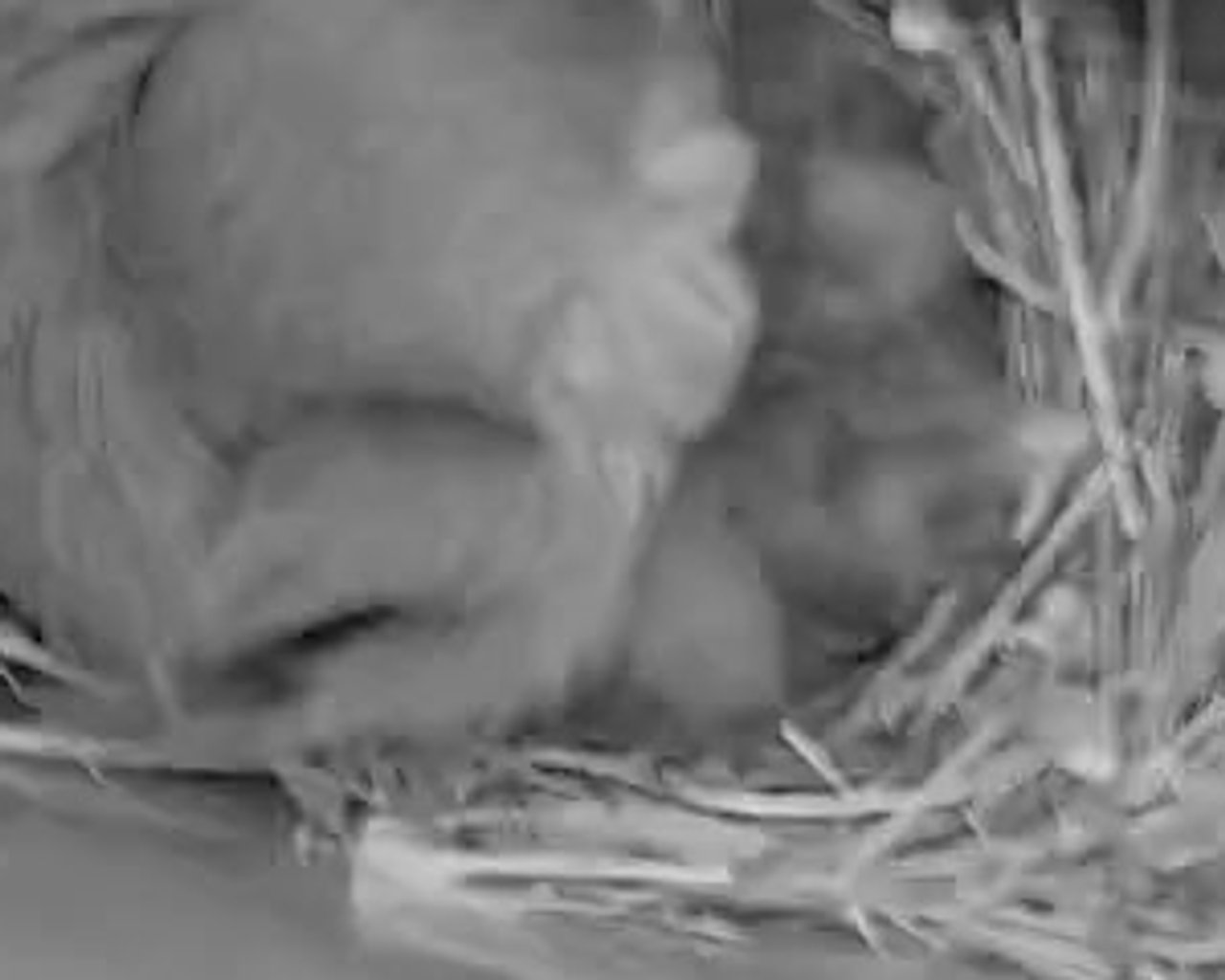
May 13 is the day the pattern declares itself. Overnight the female broods without significant gaps, and through the monochrome infrared frames small pale shapes press against her flanks — present but not yet individuated. By 08:35 a single chick is visible beside her; by 10:02 several are peeking out from beneath her body; by 12:40 at least two show clearly without any effort to conceal them. The first glimpse of independent appetite comes at 12:56, when the adults are absent and multiple chicks sit with open mouths directed at nothing — gaping into the air, the reflex running ahead of the stimulus. The male visits regularly from dawn: confirmed at 06:19, 06:58, 07:35, 08:33, 09:07, and continuing through the afternoon at roughly thirty-to-ninety-minute intervals. At 11:58 a single clip resolves five gaping chicks at once — the full brood visible in one frame.
Late that night, at 21:27 and again near 23:01, IR clips capture oval objects beside the chicks — high NIR-albedo shapes distinct from the rounded forms of chick bodies, consistent with intact unhatched eggs. One oval in the first clip, two in the second. The same signature recurs on May 14 between 20:36 and 20:41, and again on May 15 at 17:27 and 21:29: three successive nights of bright ellipses resting in the nest material alongside the brood.
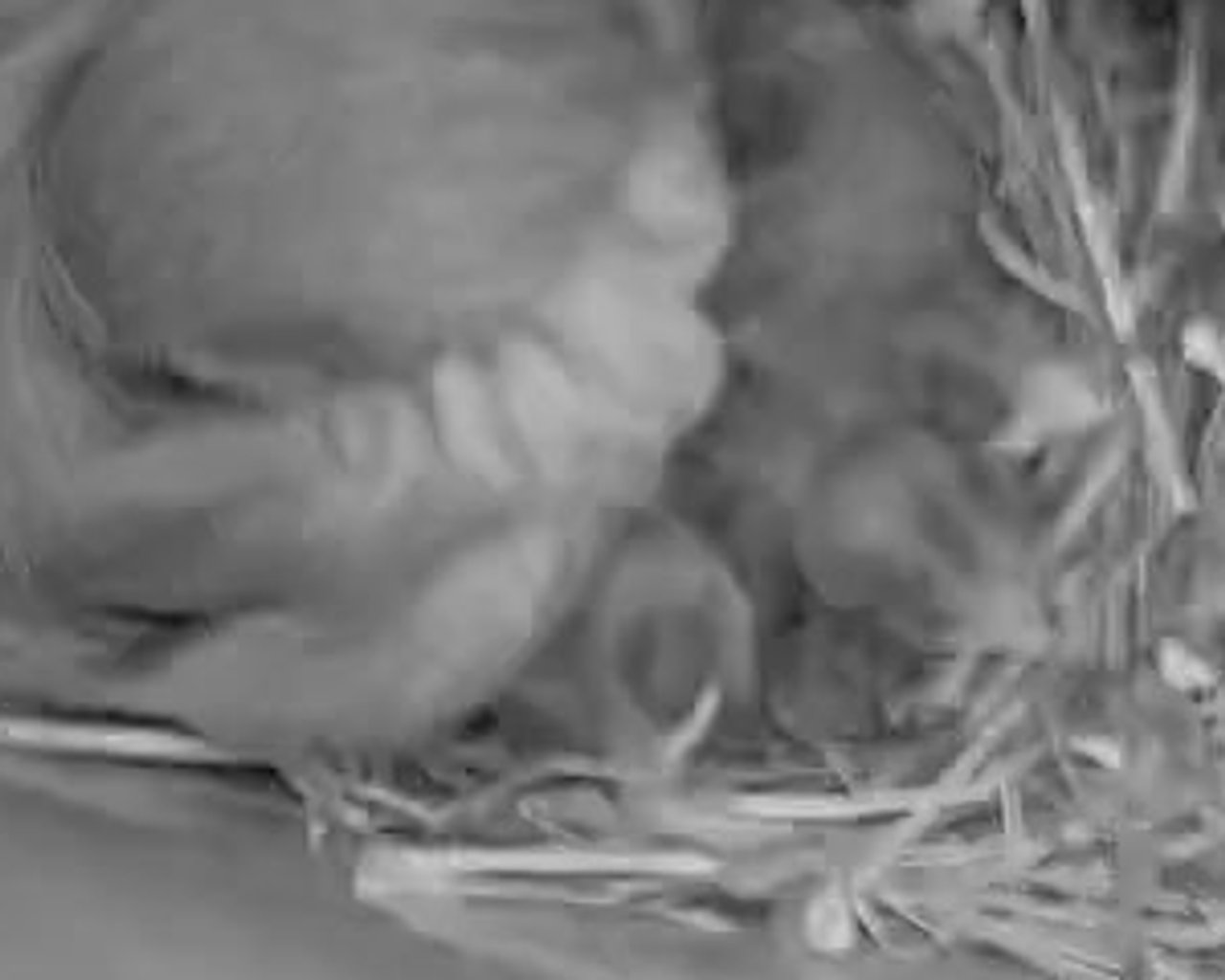
May 14 reprises the structure of the day before with tighter intervals. The female remains on the nest through all overnight hours, chick shapes scattered around her in infrared. She begins lifting off for longer stretches from 05:46; by 06:02 four chicks are clearly uncovered in the cup. Male feeding visits run from 06:26 onward at roughly twenty-to-sixty-minute spacing through the full daylight window, with documented stops at 06:53, 08:06, 08:37, 09:13, 09:49, 10:35, 11:43, 12:20, 13:08, 13:44, 14:40, 15:20, 16:29, 17:27, 18:38, and 19:23. The chicks are not passive between visits — they gape and shift — but unattended gaps of ten to twenty minutes produce no alarm.
May 15 breaks the overnight brooding pattern. Where the female had remained settled all night on the two preceding nights, she is now repeatedly on and off from midnight onward — present at 00:32, gone again shortly after, back intermittently through 05:00. The chicks hold together in the cup during the gaps, occasionally gaping into dark air with no adult in range. This is the direction of travel across these three days: full-night brooding contracting, daytime feeding rate holding or increasing. At 05:14 five chicks are visible in the cup at once — the clearest single-frame count of the period.
The day’s provisioning is the most densely documented of the three. The male arrives at 06:12 to find five gaping chicks, with a second adult briefly present in the same frame — one of several dual-parent visits recorded across the range, including May 13 at 07:35 and 12:50, and May 15 again at 12:21 and 13:04. These co-visits are brief and efficient: both adults at the cup rim, then both gone within seconds. Male visits continue through the afternoon and into evening: 13:43, 14:40–14:43, 15:26, 16:12, 17:42, 19:06, 19:43.
At 17:27 and again at 21:29, the familiar high-NIR-albedo ovals reappear alongside the chicks. Three nights running, the camera has logged the same bright elliptical outlines among the darker chick bodies. Whether they represent eggs that never hatched or eggshell fragments pressed into the cup lining, the camera cannot say. It records NIR-albedo; the rest is inference.
The three days together describe a single motion: chicks growing visible, growing active, growing loud in their gaping; adults calibrating the feeding interval downward; full-night brooding giving way to intermittent overnight presence; and somewhere in the cup, beneath five small bodies learning to be birds, the persistent pale ovals that the record cannot yet resolve.